
The phrase “sustainable event” gets thrown around a lot, but it’s worth being clear on what it actually means before you start rethinking your planning process. A sustainable event is one that’s planned and delivered with conscious attention to its environmental, social, and economic impact. The goal isn’t perfection (no event has zero footprint), but making deliberate choices that reduce waste, minimize resource use, and avoid practices that cause unnecessary harm.
More businesses and individuals in Malaysia are thinking seriously about this, and for good reason. Events generate significant waste, consume large amounts of energy, and produce carbon emissions through travel and logistics. Sustainable event planning is about finding practical ways to address these impacts without sacrificing the quality or experience of the event itself.
What Makes an Event “Sustainable”?
Sustainability in events isn’t one single practice. It’s a combination of decisions made across the entire planning and production process. There are a few core areas that come up in almost every sustainable event conversation.
1. Waste Reduction
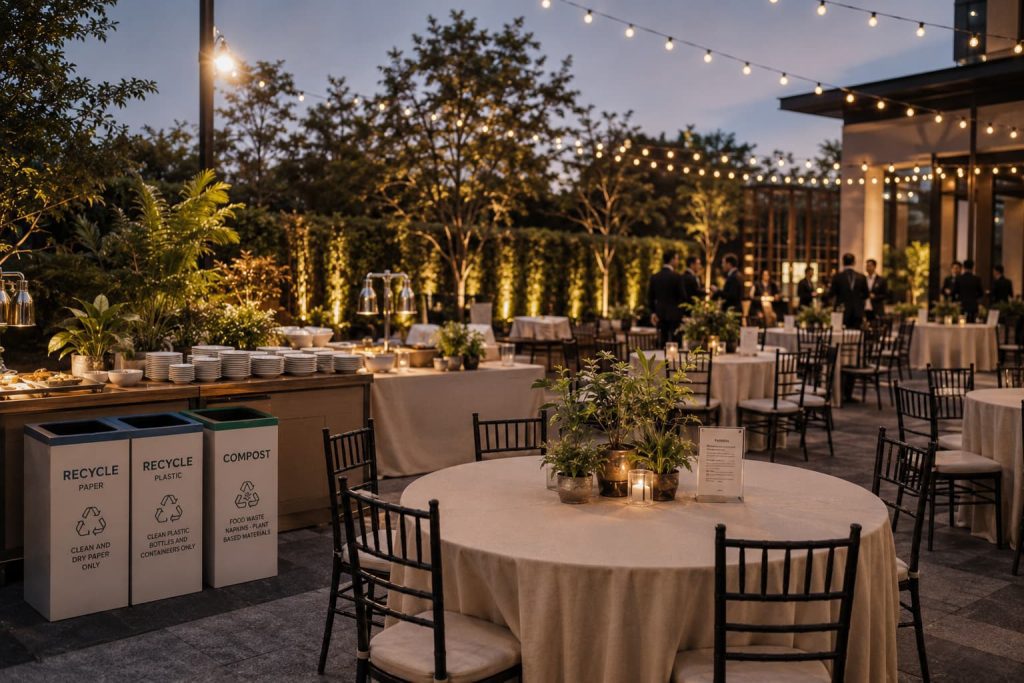
This is usually the most visible aspect. It involves choosing reusable materials over single-use items, setting up proper waste segregation on-site, and working with vendors who minimize excess packaging. A sustainable event might opt for reusable cutlery and crockery instead of disposables, or print fewer physical programmes in favor of a digital version guests can access on their phones.
2. Energy Use
Events can be heavy on energy consumption, especially when you factor in lighting rigs, AV systems, air conditioning, and on-site power generation. Sustainable event management looks at ways to reduce this, whether by choosing venues with efficient existing infrastructure, using LED lighting setups, or scheduling outdoor events to maximize natural light and reduce heavy electrical loads.
3. Sustainable Sourcing
This covers catering, materials, merchandise, and equipment. Locally sourced food reduces transport-related emissions and often supports local businesses at the same time. Choosing vendors and suppliers who operate responsibly, from sustainably produced printed materials to furniture hire rather than disposable decoration, all feed into this.
4. Social and Economic Responsibility
Sustainability isn’t purely environmental. A thoughtfully planned event also considers its social value, whether that’s providing fair opportunities to local suppliers and vendors, ensuring accessibility for all attendees, or contributing meaningfully to the community where the event takes place.
Real-World Examples of Sustainable Event Practices
It helps to see what these principles look like in practice. Here are some concrete examples across common event types.
| Practice | Conventional Approach | Sustainable Alternative |
| Catering | Single-use plastics, imported ingredients | Reusable crockery, locally sourced menu |
| Programmes and signage | Printed brochures for all guests | Digital event apps or QR code access |
| Decoration | Disposable props and single-use setups | Rented or reusable decor, living plants |
| Waste management | Single bin for all waste | Segregated bins: recyclables, compostables, general |
| Power | Diesel generator | Grid-connected venue with energy-efficient AV |
| Transport | No coordination for attendees | Shuttle buses, carpooling guidance, or central venue |
None of these require an all-or-nothing approach. Many events start by addressing two or three of these areas and build from there.
Why Sustainable Event Planning Is Worth the Effort
There’s a practical case here beyond the environmental one. Corporate clients, particularly multinational companies, are increasingly required to report on the environmental impact of their business activities, which includes events. Choosing a sustainability-conscious event partner is a straightforward way to support those reporting requirements.
There’s also the reputational angle. Events that visibly commit to reducing waste tend to reflect well on the organizing company. Attendees notice when caterers serve food on real plates, when recycling bins are clearly labeled, or when the event brief mentions that materials were sourced locally.
That said, sustainability does require upfront thought, and sometimes upfront cost. The key is prioritizing changes that have the biggest impact relative to your event type and budget, rather than trying to do everything at once.
How to Apply Sustainable Event Management to Your Next Event
If you’re planning an event and want to approach it more sustainably, here’s a practical starting point.
- Assess your biggest impact areas first. For most events, this is catering waste, printed materials, and energy use. Start there before worrying about lower-impact items.
- Brief your suppliers early. Sustainable sourcing decisions need to be made before contracts are signed. Once you’ve committed to a caterer or a decorator, your options narrow quickly.
- Choose venues that align with your goals. Look for venues with good waste management infrastructure, efficient lighting, and accessible locations that reduce travel-related emissions for the majority of your guests.
- Go digital where it’s genuinely useful. Digital programmes, event apps, and QR-based registration all reduce paper use. Just make sure they’re accessible to all guests, including those who may be less comfortable navigating apps on the day.
- Communicate it to attendees. If you’re making sustainable choices, let people know in a straightforward way. It reinforces the value of those decisions and gives guests the context they need to participate, like knowing where to sort their waste correctly.
What Sustainable Event Management Looks Like End-to-End
For sustainability to work in practice, it needs to be built into the event plan from the start, not added on in the final week of production. This is where working with an experienced event management team makes a real difference.
Our event management process at Events Wizard incorporates production decisions that affect sustainability at every stage, from venue selection and supplier coordination to staging, AV setup, and post-event breakdown. When sustainability is factored in during planning rather than after the fact, the outcomes are better and the process is less disruptive.
Whether you’re planning a corporate conference, a product launch, or a private function, there are meaningful choices you can make at every stage. The starting point is understanding what sustainable event planning actually involves, and then finding an event partner who can help you put it into practice.
If you’d like to talk through the options for your next event, get in touch with our event planning team. We’ve been planning events across Malaysia for over 20 years and we’re happy to help you build an event that’s both well-executed and responsibly planned.